
Clean exhaust gases and efficient engine performance
A functional soot particle filter is essential for modern commercial vehicles in order to meet the strict emission requirements of the Euro 6 standard. The filter captures soot particles from the exhaust gases and burns them off in regular regeneration phases. However, if the soot particle filter is saturated with ash deposits, the exhaust back pressure increases massively. This leads to a loss of power, increased fuel consumption and, in the worst case, can damage the turbocharger. At FZB Fahrzeugbedarf, you will find new particulate filters in OEM quality that impress with their high storage capacity and thermal stability and ensure the long-term operational readiness of your fleet.
Reliable spare parts for your flue gas system
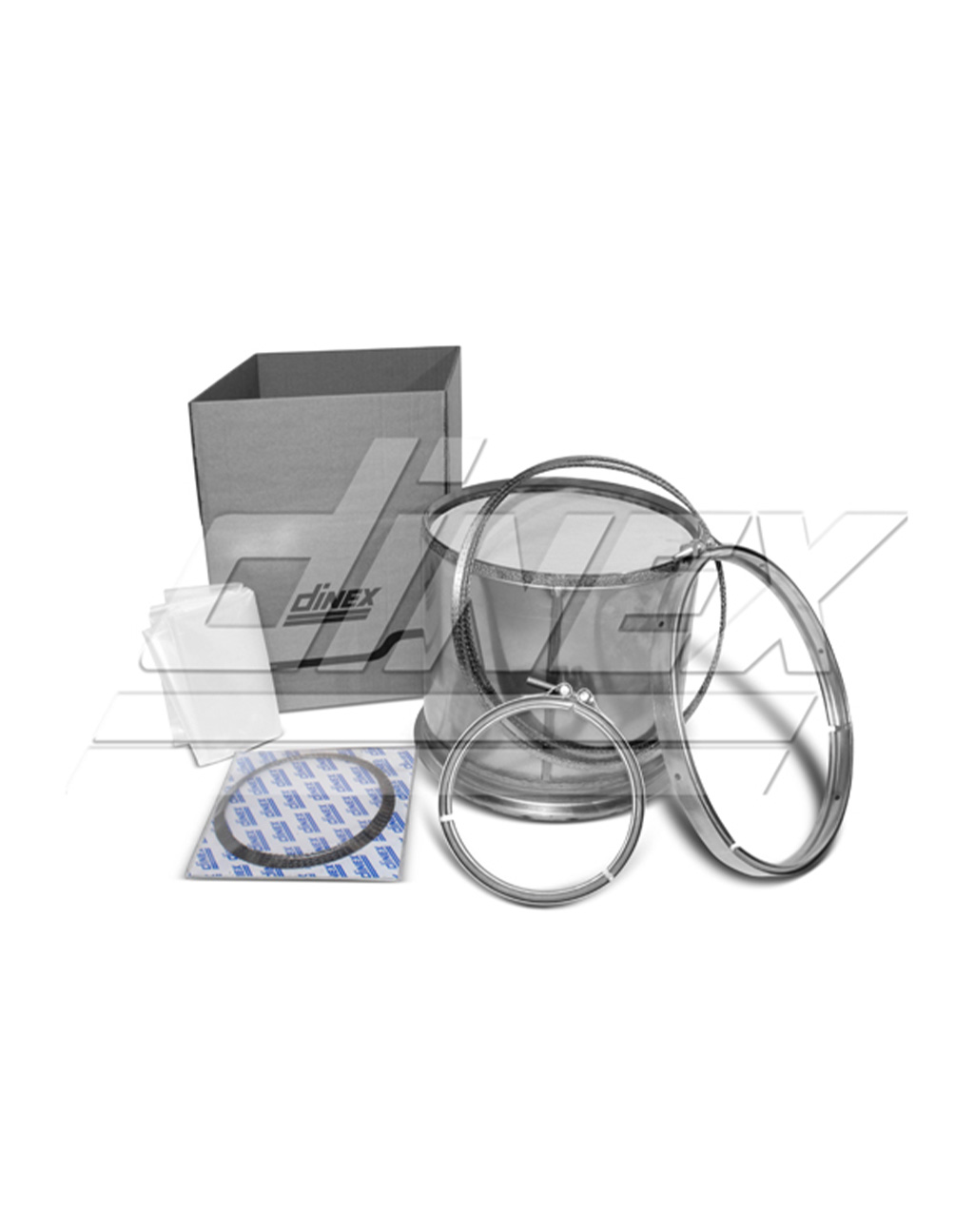
Our range includes particulate filters, soot filter modules, retaining clips, seals, mounting kits and sensors. All components impress with their precise workmanship, durability and high temperature resistance. Thanks to precisely fitting spare parts, maintenance and repair work can be carried out quickly, ensuring that your truck is ready for use and minimizing unnecessary downtime.
What should you look out for when buying?
System integration in trucks: DPF and SCR
Soot and particulate filters (DPF) are inextricably linked to the complex exhaust gas aftertreatment systems used in heavy goods vehicles to comply with the Euro VI standard. In trucks, the DPF almost always works closely with the SCR catalytic converter (Selective Catalytic Reduction), which is used to reduce nitrogen oxides (NOx) and requires the injection of AdBlue/urea. The DPF must not only separate soot particles extremely efficiently, but also create the necessary thermal conditions for the SCR reaction. The correct functioning of the filter is therefore essential for the entire exhaust gas purification chain, compliance with legal limits and the avoidance of performance losses.
The challenge of regeneration
The soot collected in the truck DPF must be burned off regularly in a process known as regeneration. In contrast to passenger cars, where this often takes place passively, truck systems often use active regeneration, in which fuel is injected into the exhaust tract or heating elements are activated in order to achieve the necessary high temperatures (up to $600\,^\circ\text$). This places extreme demands on the temperature resistance and thermal shock resistance of the filter substrate (usually ceramic). A functioning filter must be able to effectively manage soot deposition over the entire, often very long, highway journeys.
Efficiency and replacement strategies
In fleet operation, the efficiency of the particulate filter is a decisive factor. High-quality soot filters are designed for an extremely long service life and support compliance with the strict emission regulations over the entire service life of the truck. When replacing, the use of remanufactured filters (remanufactured original parts) is often a cost-effective but high-quality alternative to new parts. Regardless of the choice, the associated sensors (pressure and temperature sensors) and the retaining clamps/seals must always be checked for compatibility and maximum tightness, as exhaust gas leaks would disrupt the sensor system and massively reduce the efficiency of the entire exhaust gas purification system.
Expert guide: All about truck particulate filters (DPF)
Ensure clean exhaust gases and reliable operation
Reduce particulate emissions, protect your exhaust system and maintain the full performance of your truck. Our tested filter components enable quick replacement, minimize downtimes and keep your vehicle ready for use. Order directly online now and equip your exhaust system optimally!