Find a Replacement Part by OE/Part Number
How to Order Without Making a Mistake
In everyday workshop life, every hour counts. An incorrectly ordered part doesn’t just mean a return and a wait—it often means an extra day of downtime for a vehicle that should be earning money. The most reliable way to find the right replacement part is by using the part number. This guide shows you, step by step, what part numbers are available, where to find them, and how to use them to place an order accurately.
What numbers are there—and what do they mean?
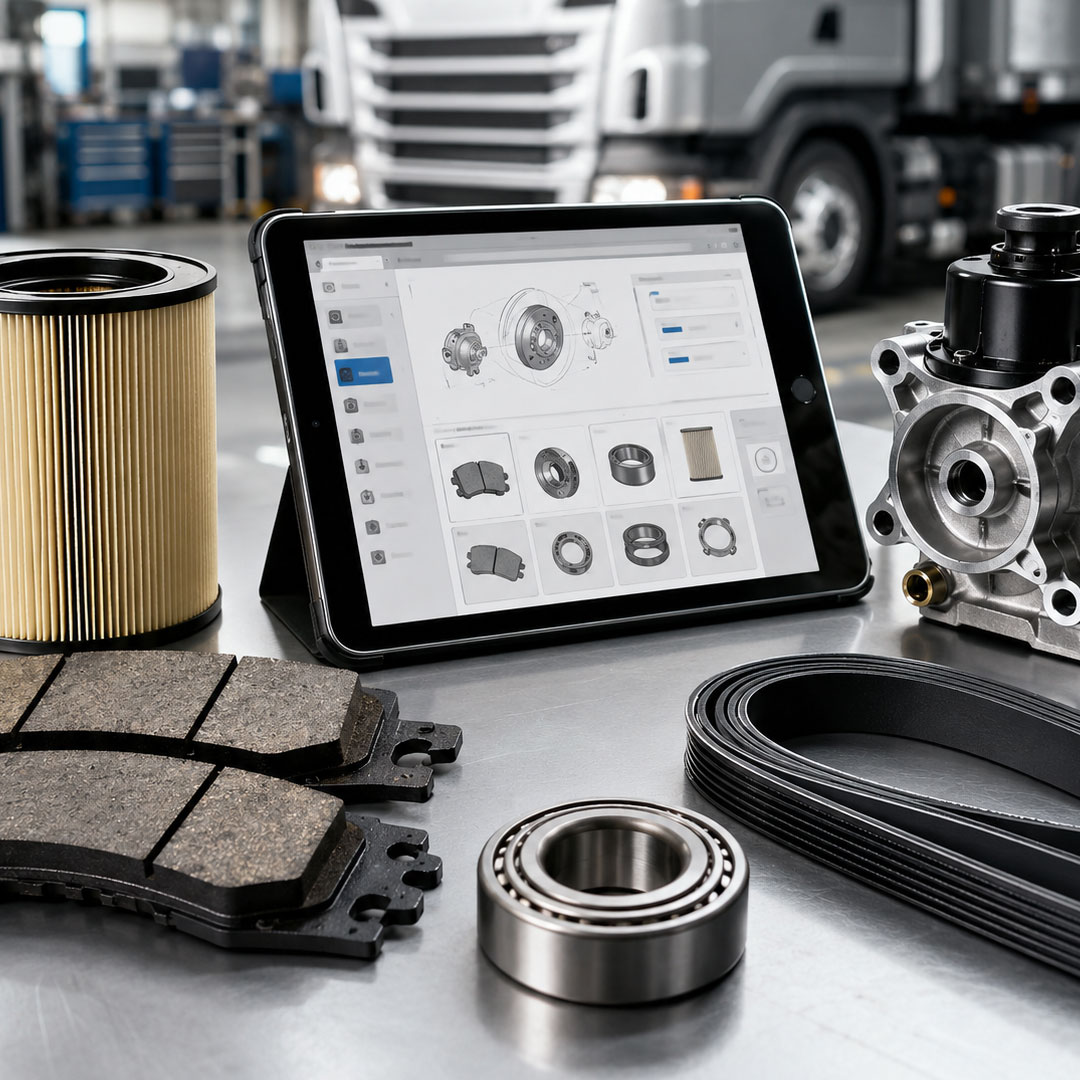
There are several part numbers in circulation for commercial vehicle replacement parts. If you can tell them apart, you’ll find what you’re looking for faster:
- OE (Original Equipment) Number: The reference number assigned by the vehicle or axle manufacturer for a specific part. It is the most precise way to start a search because it uniquely identifies the part’s fit. Depending on the manufacturer, OE numbers consist of digits, sometimes combined with letters.
- Manufacturer Number / OEM Number: The part number from the parts manufacturer (e.g., BPW, TRW, Ermax). This number can be used to find comparable or reference parts.
- FIN / Vehicle Identification Number (VIN): Identifies the vehicle, not the part. It helps narrow down the correct part based on the vehicle context—but should not be confused with the part number.
Rule of thumb: You can find the part fastest using the OE or manufacturer number. If no number is available, the VIN can help narrow down the vehicle.
Step by Step: Identifying the Right Part
1. Check the part number on the old part
The most reliable starting point is the original part that was removed. The OE or manufacturer’s number is usually stamped, molded, or affixed to a label. Clean any dirty areas—especially on axle and brake components, where the stamping is often hidden beneath layers of dirt.
2. Check the nameplate on the axle or assembly
Many commercial vehicle parts can be identified using the type plate on the axle or assembly. This is particularly helpful for chassis components—for more information, see “BPW Chassis Systems Explained.”
3. Consult the vehicle documentation
If a part number is missing, the registration certificate and VIN provide the vehicle context needed to narrow down the model, model year, and variant.
4. Write down the number correctly
Copy the number exactly—confusions such as 0/O or 1/I are the most common source of errors. If in doubt, take a photo of the sign.
5. Verify the number in the online store or by contacting customer service
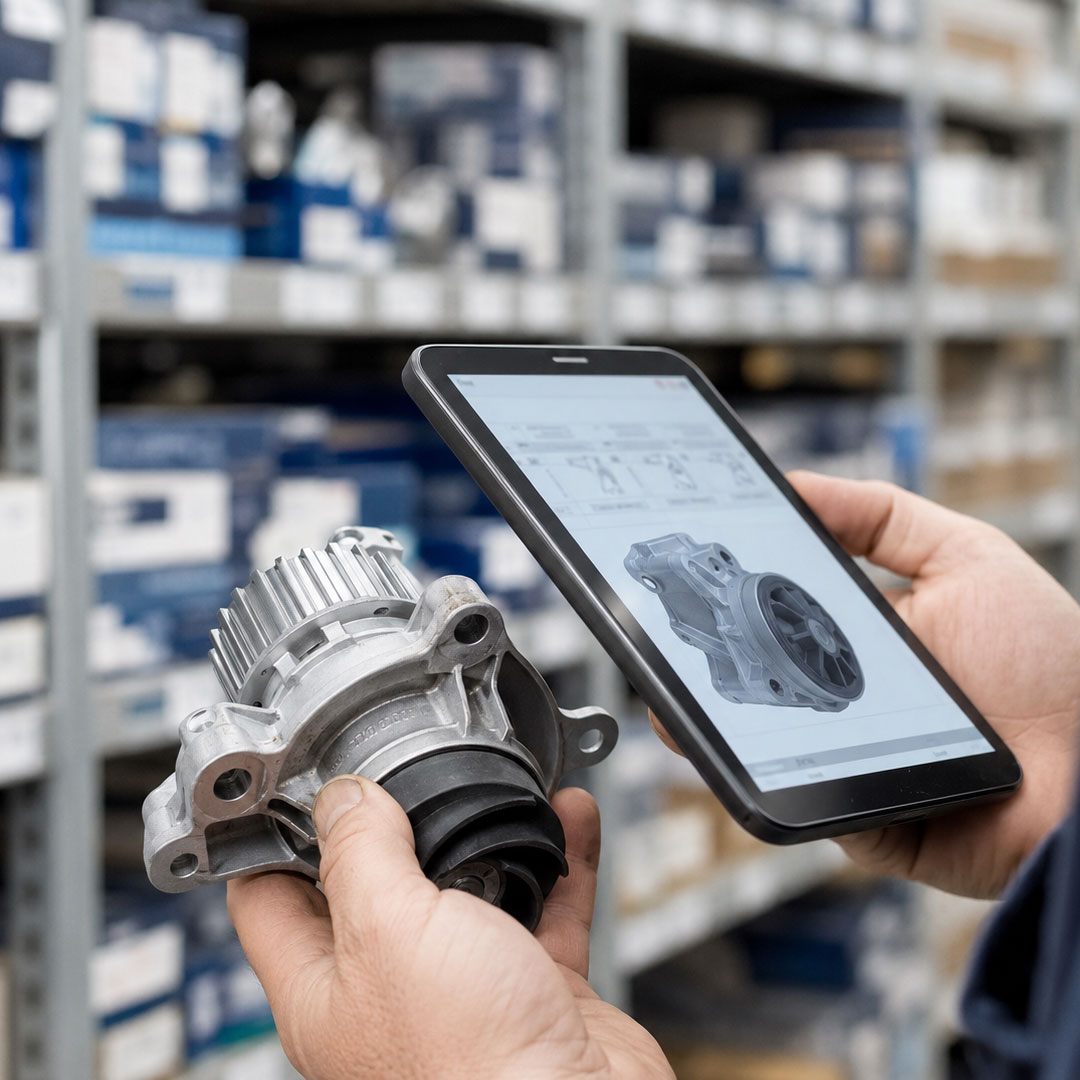
Enter the number in the FZB online store. As a registered customer, you’ll have access to advanced product identification features there. If you’re unsure, check the number with our team.
Original, Ident, or replica—what should you look for in the number?
There are compatible aftermarket or replacement parts available for many OE numbers. Which option makes economic and technical sense depends on the component and its application—you should evaluate safety-critical parts more strictly than parts that are purely subject to wear or are simply accessories. You can find guidance on this in “Original vs. Aftermarket Part: When Is Which Option Worth It?”. Important: Even with aftermarket parts, the OE number remains your reference point for fit.
The Most Common Sources of Error
- Transposed digits and typos in long OE numbers.
- OE number confused with VIN—the VIN describes the vehicle, not the part.
- Overlooking the variety of variants: same model series, but different axle or brake configurations.
- Search was performed by name only, not by number—“rear brake pad” is not a unique search criterion.
Order Faster with FZB
As the largest full-range supplier in the commercial vehicle parts industry, FZB combines a selection of over 350,000 items with personalized advice and five locations in Austria—in Tribuswinkel, Kalsdorf, Kolsass, Linz, and Villach. You can place orders online through the web shop and, if needed, have a direct point of contact at the same time.
If you’re unsure about a part number, your FZB location can help you identify it—so you get the right part the first time.
See for yourself: shop.fahrzeugbedarf.at | +43 (0) 5 7172 0