
Truck Brakes: Disc vs. Drum
When the tires need to be replaced
In commercial vehicles, the brakes determine more than just stopping distance: They are the most important inspection point during the §57a inspection and the most common reason for unscheduled visits to the repair shop. If you know the difference between disc and drum brakes and how to spot worn brake pads, you can avoid costly consequential damage and downtime. This article summarizes the most important information for repair shops, fleet managers, and DIY mechanics.
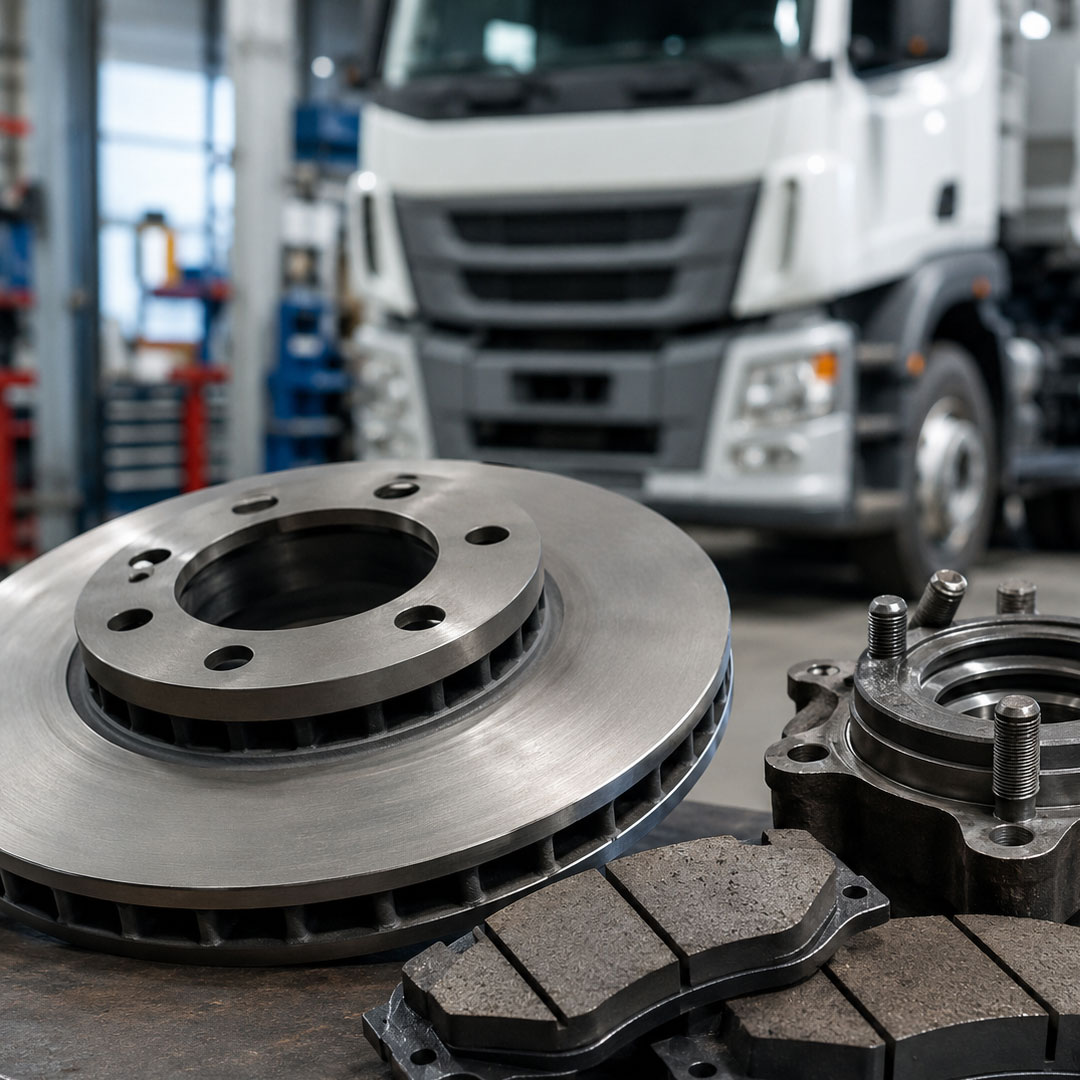
Disc brakes or drum brakes—what’s the difference?
Both systems use friction to slow down, but they implement it differently.
The disc brake presses two pads against a rotating disc from the outside. It provides uniform deceleration, dissipates heat quickly, and is significantly less prone to so-called “fading”—the loss of braking performance due to heat. Modern trailer and axle systems, such as the BPW disc brake, almost exclusively use this design today. Replacing the brake pads is usually quicker and can be done without special tools.
The drum brake presses two brake shoes from the inside against a rotating drum. It is resistant to dirt and splashing water, less expensive to purchase, and remains widely used in agricultural and heavy-duty applications. Disadvantage: It retains heat more effectively, and wear is harder to assess from the outside.
In practice, this means that trailers and many modern axles are equipped with disc brakes, while drum brakes are still commonly found on older vehicles and agricultural vehicles. The type of system installed is listed in the vehicle documents or on the axle’s nameplate.
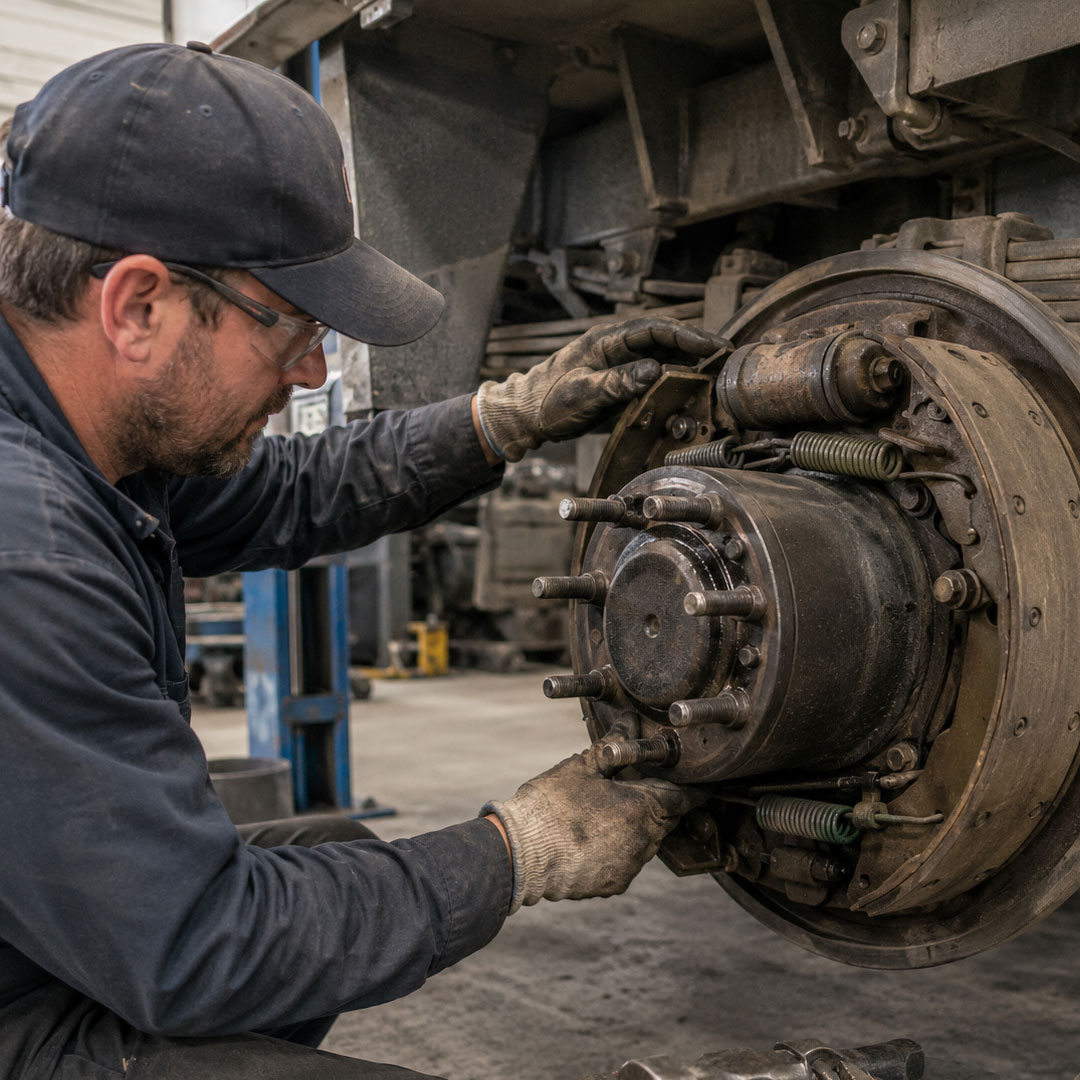
How can I tell if my brake pads are worn out?
Brake pads are wear parts—it’s never a question of “if,” but “when.” You should take these signs seriously:
- Squeaking or Grinding: Many brake pads have an audible wear indicator. A metallic grinding sound usually means the pads are worn through, putting the rotor or drum at risk.
- Longer braking distance / spongy pedal feel: indicates worn brake pads or a problem with the air brake system.
- Warning message in the EBS/ABS: Electronic braking systems report brake pad wear or sensor malfunctions directly on the display.
- Vibrations or a grinding noise when braking: often an indication of warped rotors or uneven brake pad wear.
- Uneven wear on the left/right: may indicate seized calipers, axle problems, or a defective clamping mechanism.
Important: Worn brake pads are often just the visible symptom. Always check the rotor or drum, the caliper guides, and—especially in the case of older breakdowns—the entire braking system as well. Read more about this in our article “5 Common Causes of Truck Breakdowns.”
When do the brake pads need to be replaced?
There is no fixed kilometer interval for commercial vehicles—load, topography, driving style, and usage profile all determine wear and tear. The wear limits specified by the axle or brake manufacturer are always the deciding factor. As a general guideline:
- Check the remaining tread depth: If the friction material reaches the minimum thickness specified by the manufacturer, the pads need to be replaced—not just when they start to grind.
- Check the following during every maintenance service: Brake pads should be included in every service and vehicle inspection.
- Replacing by axle: Always replace the brake pads for an entire axle at once; never replace them on just one side.
- Include the disc/drum in the assessment: Grooves, cracks, or a thickness below the minimum requirement mean the part must be replaced.
If you drive with worn-out brake pads for too long, you not only risk having to replace the significantly more expensive brake disc or drum, but also failing the vehicle inspection.
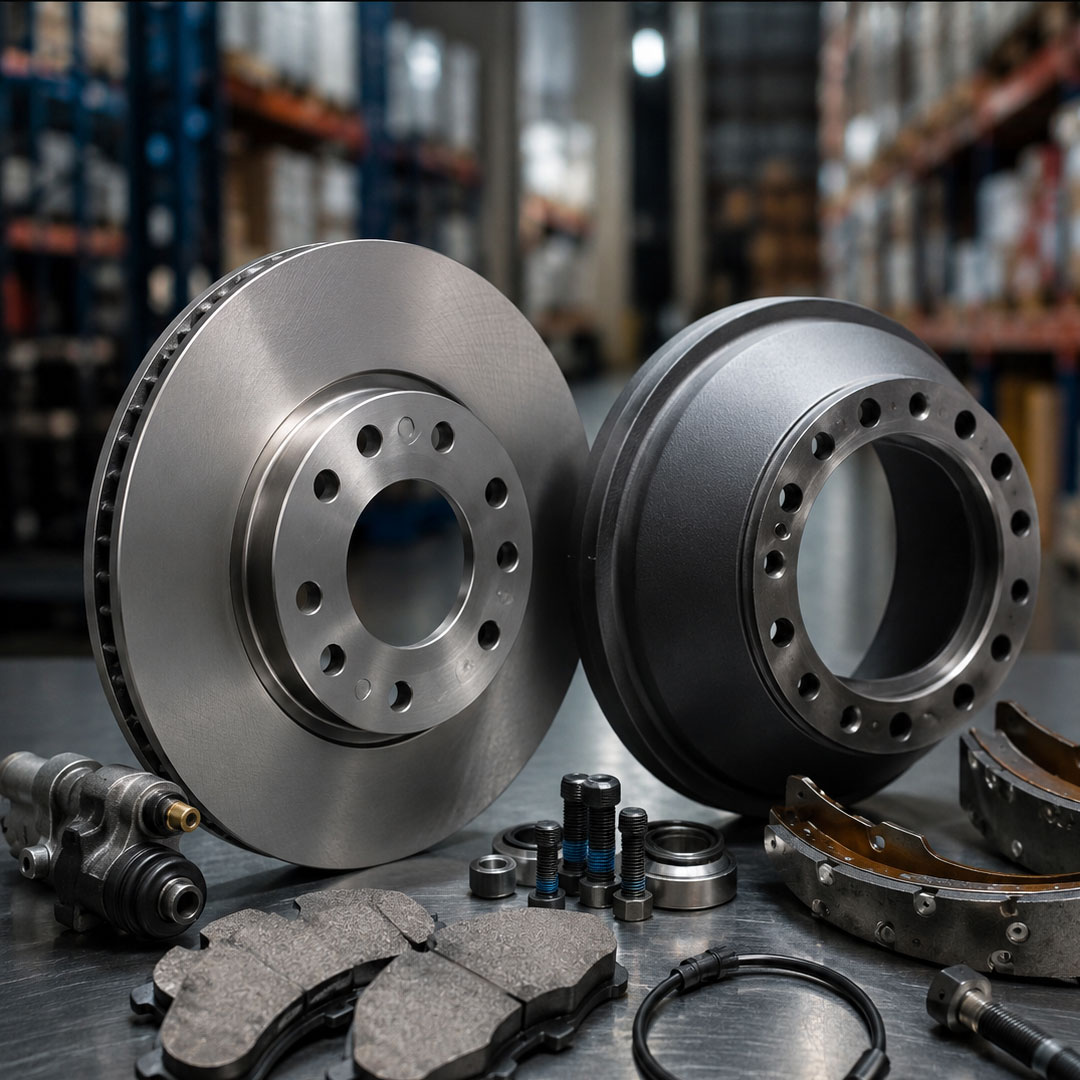
Original, replica, or reproduction?
When it comes to brake pads, quality isn’t a matter of style—it’s a matter of safety. You generally have the choice between an original part, an equivalent-quality aftermarket part, and a replacement part. We explain in detail which option makes sense in which situation in the article “Original vs. Replacement Parts: When Is Which Worth It?” In any case, make sure the part has valid approval (e.g., ECE marking) and fits the installed axle exactly.
Find the Right Part
As a full-range supplier with over 350,000 items, FZB carries brake pads, rotors, drums, and complete brake kits from well-known manufacturers—ranging from BPW components to aftermarket brands such as TRW. You can find the perfect brake pad through our online store or by calling your local branch.
You can read more about the axle and suspension technology behind it in ” BPW Suspension Systems Explained.”
shop.fahrzeugbedarf.at | +43 (0) 5 7172 0