
The role of the flywheel
A high-quality flywheel is the mechanical centerpiece for smooth engine running and efficient power transmission in commercial vehicles. It not only serves as an energy store to compensate for torque fluctuations, but also acts as a crucial friction surface for the clutch. In heavy trucks, the flywheel has to withstand extreme thermal loads and high mechanical forces. Our components in OEM quality guarantee precise balancing and excellent material quality in order to minimize vibrations in the drivetrain and extend the service life of the engine and transmission in the long term.
Precision in weight and design
To ensure that the flywheel works perfectly, the dimensions, bores and balance must match your engine and clutch configuration exactly. Accessories such as balance weights, bolts or threaded bushes must be compatible and must not lead to vibrations or imbalances.
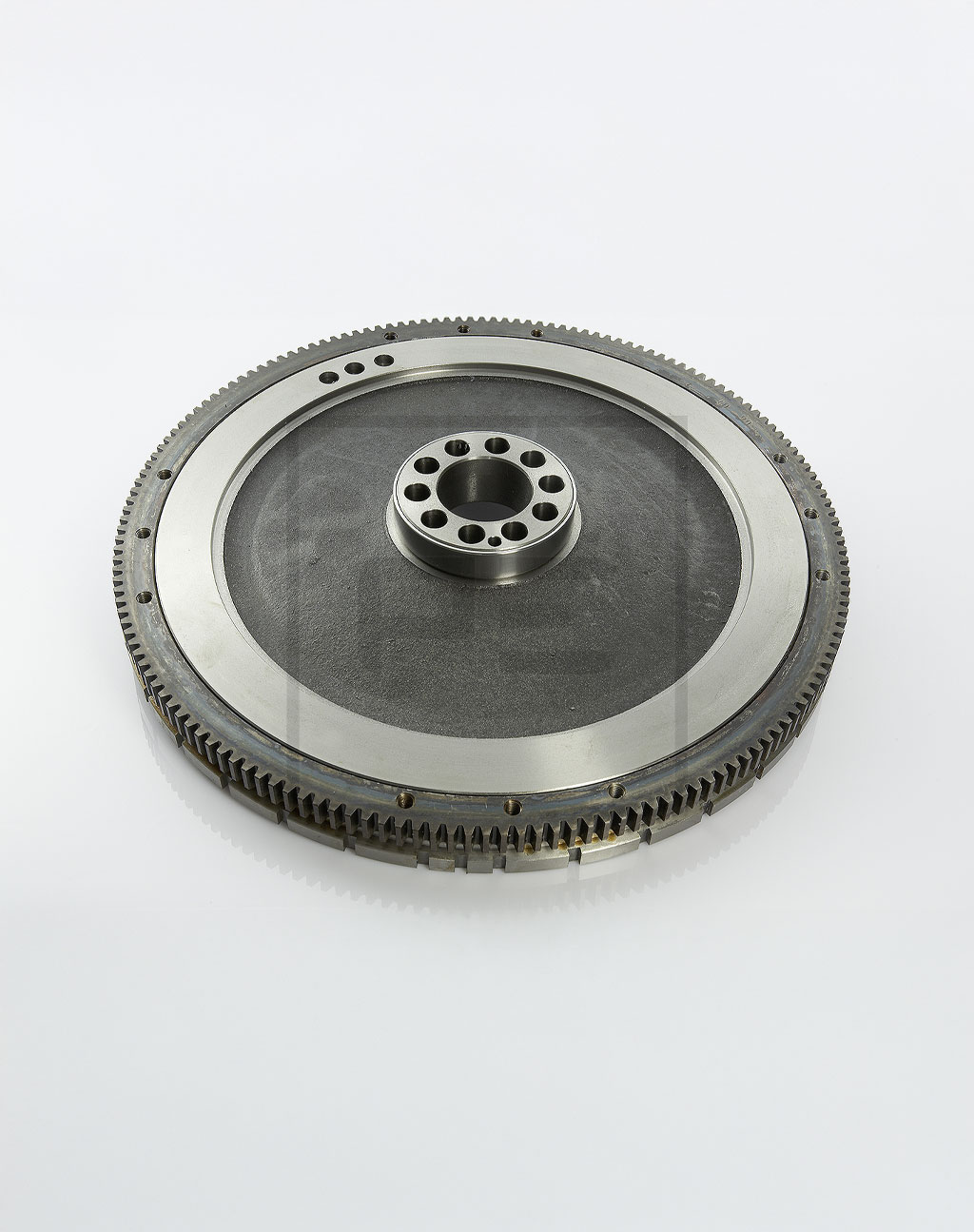
What should you look out for when buying:
The flywheel guarantees smooth running and efficiency
In modern commercial vehicles, the flywheel plays a key role in reducing torsional vibrations. Particularly in high-torque diesel engines, the mass of the flywheel ensures that the uneven rotational movements of the crankshaft are smoothed out. This not only protects the transmission components, but also improves driving comfort and reduces fuel consumption thanks to more stable engine running in the low speed range. High-strength alloys ensure that the component remains absolutely dimensionally stable even under permanent maximum loads.
When it is essential to replace the flywheel
Wear on the flywheel is often manifested by tarnishing (heat spots), cracks in the friction surface or damage to the starter ring. As a replacement usually involves replacing the clutch, choosing a robust spare part is crucial for the efficiency of your fleet. An inferior flywheel can lead to increased clutch wear or even damage to the crankshaft bearing. With components from FZB, you can rely on tested quality that is precisely matched to the specifications of well-known truck manufacturers in order to avoid expensive follow-up repairs.