
Compressed-Air Brake Systems in Winter: Prevent Freezing and Maintain the Air Dryer
The first night of frost separates the wheat from the chaff. If the brakes lock up in the morning, a valve sticks, or the parking brake won’t release, there’s almost always the same cause: moisture in the compressed air system that has frozen overnight. This is frustrating, expensive, and preventable. This article explains how water gets into the system, why the air dryer is the most important component for preventing this, and what you should check before winter.
How Moisture Enters the Compressed Air System
The brakes in heavy-duty commercial vehicles operate using compressed air. To do this, the compressor draws in ambient air and compresses it—and this air always contains water vapor. During compression and subsequent cooling, this vapor condenses into water. Without countermeasures, it accumulates in air tanks, lines, and valves.
In the summer, this is a matter of corrosion and wear. In the winter, it becomes a safety issue: If the water freezes, valves jam, lines ice up, and in the worst-case scenario, the brakes can no longer be released or applied properly. The goal of any winter preparation for a compressed air system is therefore always the same—to prevent water from entering the system in the first place and to drain any water that does accumulate in a timely manner.
The air dryer: the most important component for preventing frost damage
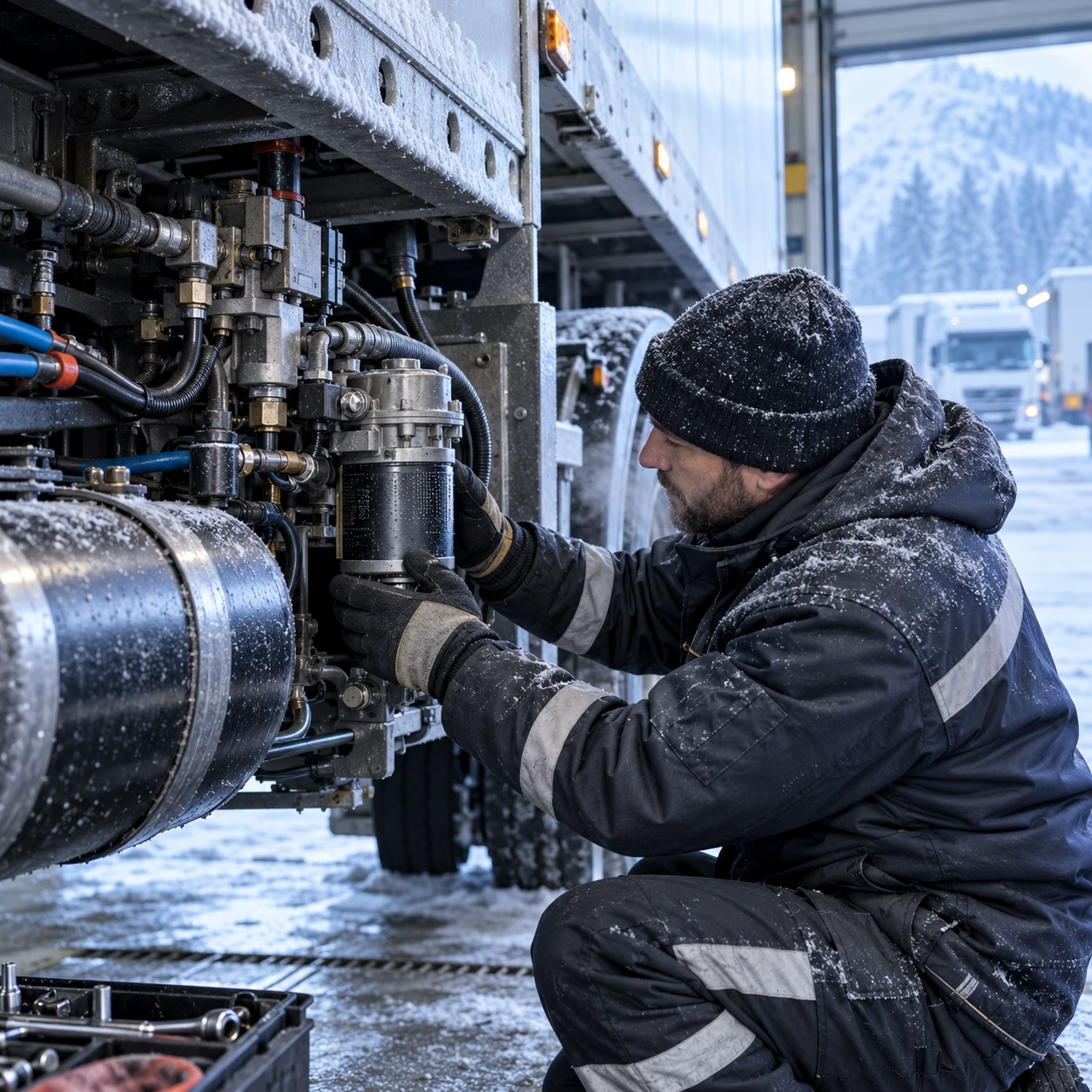
Modern compressed-air systems are equipped with an air dryer for this purpose. Its cartridge contains granules that remove moisture from the compressed air before it enters the tanks. As long as the dryer is functioning properly, the system remains dry—and thus protected against freezing.
The problem: The granules lose their effectiveness over time. An old or saturated cartridge lets moisture through without you noticing right away—until the brakes seize up during the first frost. That’s why:
- Replace the cartridge according to the manufacturer’s instructions. The replacement interval depends on the vehicle and its usage; many garages replace the cartridge once a year, ideally before winter.
- Check its condition and age in the fall. If you don’t know when the cartridge was last replaced, it’s best to replace it.
- Don’t just check the cartridge. You should also check the air dryer’s heater (if equipped) and its dehumidification performance. A fresh air dryer cartridge is one of the most affordable ways to protect against the most expensive breakdown day of the year.
Don’t forget to drain it
Even if your dryer is working properly, you must drain the air tanks regularly. Many vehicles have drain valves for this purpose—some automatic, some manual.
Before winter, you should:
- the drain valves for proper function and leaks
- drain drain the air tanks and check for water leakage (if a lot of water comes out, this is a warning sign that the dryer is worn out)
- Replace stuck or leaky valves before they fail completely in freezing temperatures.
Antifreeze: Yes or No?
In practice, many mistakes are made here. The answer depends on how your system is set up:
- Vehicles with air dryers do not no antifreeze. On the contrary: alcohol or antifreeze additives can damage the drying granules and render the dryer ineffective. In this case, the functioning dryer itself acts as the antifreeze.
- Older systems without air dryers sometimes use an antifreeze pump that injects a suitable antifreeze agent into the air. Antifreeze protection is only intended for such systems—and even then, only the agent approved by the manufacturer in the correct dosage.
So, if in doubt, first determine which system is installed, and then take action—don’t just add “antifreeze” across the board.
Winter Inspection of the Compressed Air System
1. Air dryer cartridge: Check age and condition; replace if in doubt
2. Drain valves: Check function and tightness; drain the tank
3. System tightness: Monitor pressure drop with the engine off
4. Compressor and pressure regulator: Check flow rate and cut-off pressure
5. Hoses and coupling heads: Check for chafing, cracks, and leaks
6. Parking brake: Test for secure release and hold
7. For systems without a dryer: Check the antifreeze pump and reservoir
The air brake system’s airtightness is also a mandatory inspection item during the §57a inspection
— those who check before winter usually feel more relaxed when getting their vehicle inspection sticker.
If something does freeze
If the system is frozen, there’s one thing above all else: do not use force or an open flame. Compressed-air tanks and components must never be thawed with an open flame. Park the vehicle in a heated garage and let it thaw. Then fix the cause—usually water in the system due to a worn-out desiccant. Simply driving on and hoping for the best is the worst possible option when it comes to the brakes.
Find the right parts at FZB
Air dryer cartridges, drain valves, brake valves, coupling heads, and—where applicable—antifreeze are at the core of the FZB product line, which includes over 350,000 items. The quickest way to find out which part fits your vehicle is to check the FZB Webshop or contact your local FZB location. Our article “Replacing Truck Brake Pads” also illustrates how closely brake condition and safety are linked. And since winter demands more than just dry brakes, it’s worth taking a look at the winter tire requirements for trucks.