
Austria’s 2026 CO₂ Toll: What’s Changing for Freight Carriers
For a transportation company, the toll is not a minor expense but one of the largest variable cost categories. Since 2024, the toll in Austria has been based not only on kilometers and axles but also on the vehicle’s CO₂ emissions. In 2026, this trend will intensify significantly. This article explains how the CO₂ toll is structured, what the five emissions classes mean, and what companies should be doing now.
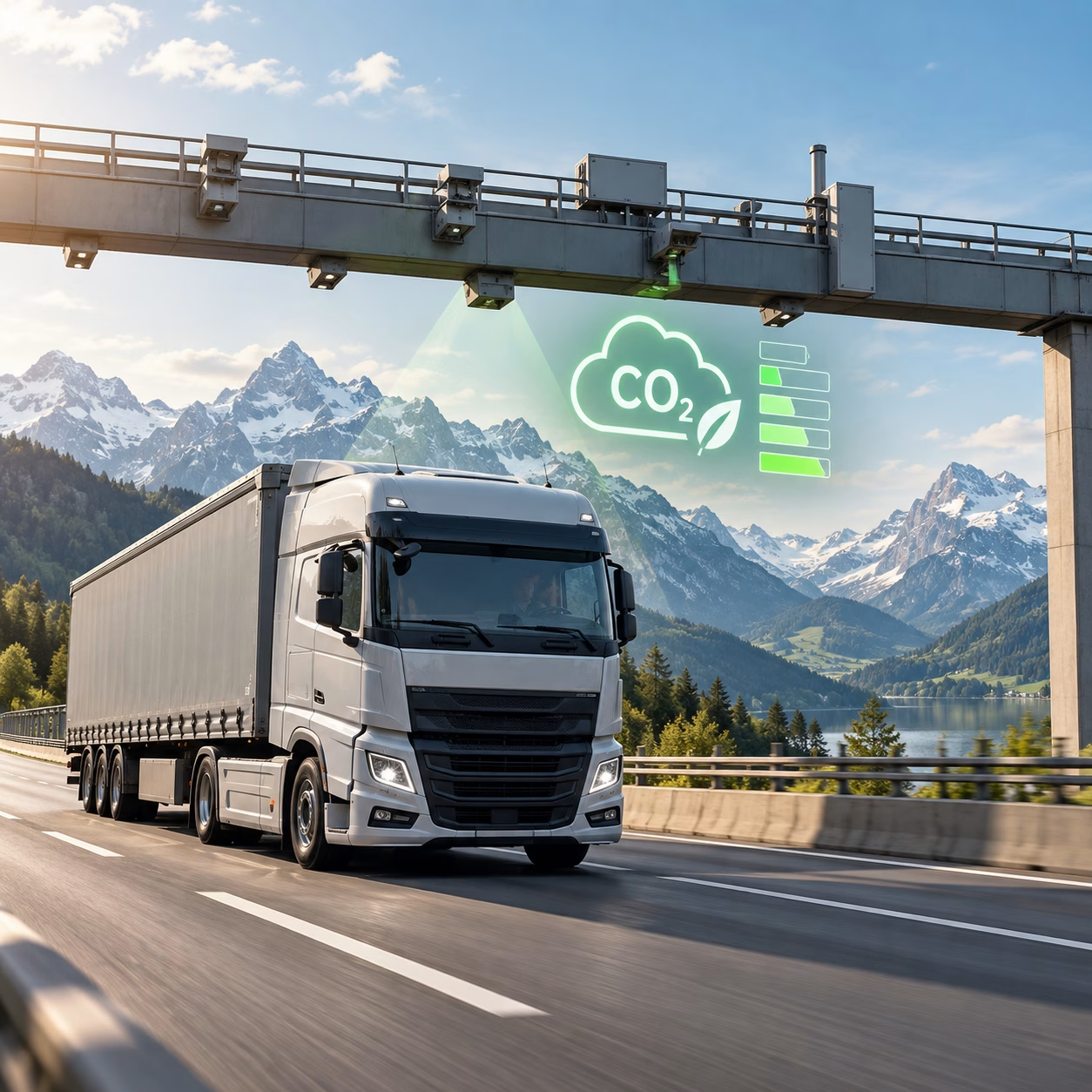
How the Austrian Truck Toll System Works
The distance-based toll applies to motor vehicles with a gross vehicle weight rating (GVWR) exceeding 3.5 metric tons on highways and expressways and is billed via the GO-Box. The per-kilometer rate consists of several components:
- the infrastructure component (based on the number of axles),
- surcharges for air pollution and noise,
- and, starting in 2024, a CO₂ component that depends on the vehicle’s emission class.
In addition, higher rates apply on special toll sections such as the A 13 Brenner Highway and the Arlberg, Tauern, Gleinalm, Bosruck, and Karawanken tunnels. In short: Drivers of clean, modern vehicles pay less for the CO₂ component than those driving older diesel vehicles.
The Five CO₂ Emission Classes
At the heart of the CO₂ toll are five emission classes. The logic is simple: The cleaner the vehicle, the higher the class, and the lower the CO₂ emissions.
- Class 5 is the highest tier and includes zero-emission vehicles, namely electric and hydrogen trucks.
- Class 1 is the most expensive. It includes all vehicles that do not meet the requirements of the higher classes—including, by default, Euro 6 trucks first registered before July 1, 2019, as well as buses.
Important to note: A Euro 6 truck is not automatically placed in a lower-cost class. To be classified in classes 2 through 5, the relevant documentation must be submitted to ASFINAG—otherwise, the vehicle will be classified in the most expensive class, class 1. You can find the CO₂ calculator and information on the documentation requirement on ASFINAG’s GO-Maut portal. This step saves you money: If you neglect it, you’ll end up paying the highest rate unnecessarily.
What’s Changing in 2026
2026 will bring several changes—and most of them will be for the better.
The CO₂ component is rising significantly. According to ASFINAG, a truck with four or more axles in the worst emissions class, Class 1, pays approximately 9.04 cents per kilometer for the CO₂ component alone (in 2024, the rate was 3.87 cents; in 2025, it will be 6.46 cents). Even in Class 3, the CO₂ surcharge is climbing to about 8.18 cents per kilometer, according to ASFINAG. Over the course of a long-haul truck’s annual mileage, this adds up significantly.
The classification system is becoming stricter. As of July 1, 2026, an EU regulation will require lower reference values and, consequently, stricter thresholds for Classes 2, 3, and 4. The result: A vehicle that was still in Class 3 in 2025 may drop to Class 2 or 1 in 2026—and will therefore become more expensive. Vehicles that are already in Class 4 or 5 are not affected by this change. The CO₂ reference value is also decreasing annually, by 3 percent each year between 2026 and 2030 (until 2025, the rate was 2.5 percent).
The number of affected vehicles is growing. So far, the CO₂ classification has primarily applied to heavy-duty vehicle categories. In the course of 2026, additional vehicle categories will be added, including lighter trucks—such as those with a 4×2 configuration—in the 7.5- to 16-metric-ton range. Smaller businesses, therefore, should not dismiss this issue as a problem limited to long-haul transport.
There is also some relief: The automatic inflation adjustment for the infrastructure component has been suspended on a one-time basis for 2026, which means this portion of the toll will remain stable. However, this does not affect the steering effect of the CO₂ rates.
Zero-emission driving pays off when it comes to tolls
The flip side of the coin: Zero-emission trucks weighing over 3.5 metric tons receive a 75 percent discount on the infrastructure component, and this discount has been extended through 2030. Combined with classification in the lowest emission class (Class 5), this creates a growing cost advantage over diesel. Whether switching to electric trucks is worthwhile for your business depends on many factors—you can find an honest assessment of this in “Electric Trucks in the Fleet: Is the Switch Already Worth It in 2026?”.
What Businesses Should Do Now
- Verify the classification and provide documentation. Ensure that your Euro 6 vehicles are correctly classified in the best possible CO₂ class and that the documentation has been filed with ASFINAG. Without documentation, Class 1 applies.
- Monitor reclassifications starting in mid-2026. Check whether vehicles have been downgraded due to the stricter thresholds, and factor the additional costs into your freight rates.
- Plan routes carefully. Special toll sections and the Brenner surcharge can significantly increase the cost of individual trips.
- Think long-term when developing a fleet strategy. When making replacement investments, it’s worth considering the emissions class—it applies to the vehicle throughout its entire service life.
FZB supports your fleet—no matter what you drive
Whether diesel or zero-emission: Maintenance and replacement parts are still needed. As a full-range supplier with over 350,000 items, FZB has the parts you need for your entire fleet—for both tractors and trailers. Contact your local FZB location or place an order in the FZB Webshop. And since a vehicle eligible for reduced toll rates must also be in good technical condition, it’s worth looking into the §57a inspection.