Lighting During the Darker Months: See and Be Seen
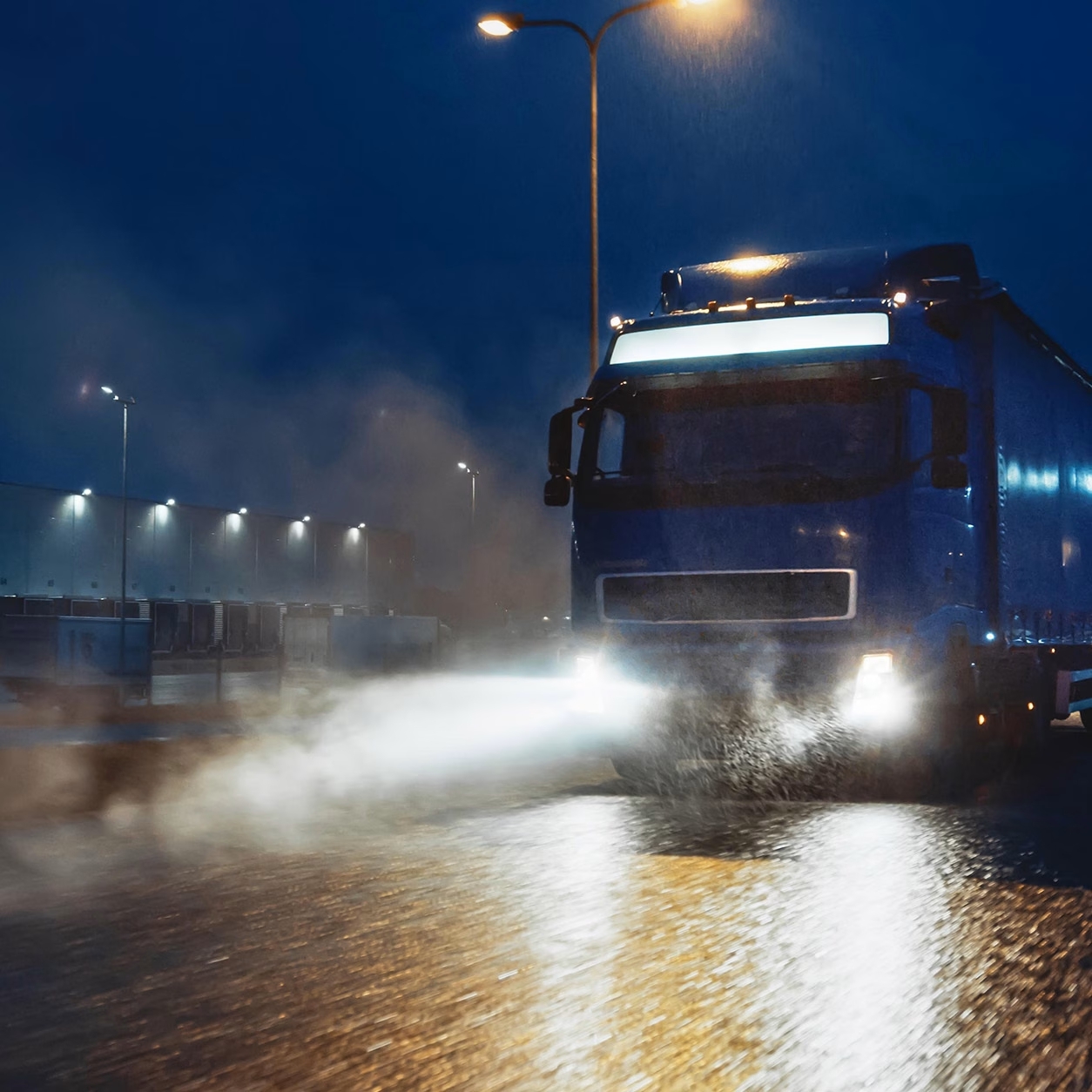
In November, it gets dark in the afternoons; the road is wet, and fog and spray swallow up the light. Now, lighting is crucial for safety—and now every defective light that went unnoticed in the summer comes back to haunt you. This is no minor issue: Incorrect or defective lights are among the most common serious defects found during vehicle inspections. This article explains what you should check before and during the dark season.
Why Light Matters Right Now
Two factors come into play during the winter months. Visibility decreases —a large portion of trips take place at dusk, in the dark, or in poor weather conditions. And conditions get worse: moisture, dirt, and salt take a toll on the headlights; dirty reflectors reduce light output; and splashing water makes a trailer with dirty taillights nearly invisible to following traffic.
With heavy-duty commercial vehicles, sheer size is another factor: A 40-metric-ton truck with malfunctioning taillights or clearance lights is a real danger in the dark—for everyone driving behind it.
A broken light isn’t a trivial offense
The severity of this issue is evident from the vehicle inspection defect statistics. According to an ÖAMTC analysis, defects in parking lights and taillights are among the most common serious defects found during the “Pickerl” inspection; these are compounded by improperly adjusted headlights and defects in the condition and function of the headlights. Overall, about one in eight vehicles inspected was on the road with a defective lighting system. The ÖAMTC technician’s key statement sums it up: “There’s no such thing as a minor defect when it comes to lights.”
In practice, this means that lighting is a mandatory inspection item during the §57a inspection, and a lighting defect can cost you your inspection sticker. If you keep a close eye on your lights, you’ll avoid any unpleasant surprises on the lift.
The Lighting Check: What You Should Check Regularly
There are many things you can check yourself in just a few minutes—ideally on a regular basis, not just once in the fall:
-
-
- Low Beam and High Beam: Both sides must function properly, with uniform brightness; no blind spots or cloudy lenses.
- Parking lights, tail lights, and clearance lights: Complete and in working order—these are the ones most often overlooked.
- Brake and turn signal lights: on the towing vehicle and trailer, also tested in combination.
- License plate lights and rear fog lights: present and in working order.
- Trailer lights: the most common weak point. Check plug connections and wiring harnesses for corrosion and at control points—wet, dirty contacts are the number one cause of failure.
- Dirt and Damage: Clean the deflector plates; replace any broken or cracked covers.
-
Adjusting Headlights Properly
One point that’s often overlooked: Not only defective headlights, but also improperly adjusted ones are considered a defect. Headlights set too high blind oncoming traffic, while those set too low reduce visibility. Headlights should be adjusted at a repair shop using the proper testing equipment—especially after replacing a bulb or headlight, and for load-dependent systems. An annual inspection is the minimum requirement, and before winter is the best time to do it.
Visibility: Being seen is half the battle when it comes to safety
Seeing is one thing; being seen is another. Clean, intact reflectors and contour markings make a big difference when a long semi-trailer needs to be visible from behind in wet and dark conditions. Check reflective markings and reflectors for completeness and condition—and keep them clean. If you’re considering upgrading to rugged, long-lasting LED technology, you can find the legal requirements in “Retrofitting LED Lighting for Trailers.”
What if the light flickers or goes out?
Flickering or failing lights aren’t always caused by the light itself. Often, the problem lies in corrosion in electrical connectors, a poor ground connection, or low vehicle voltage—the latter is often related to the battery and the charging system, which are already under strain in the winter. To learn how to avoid starting problems and low vehicle voltage, read “ Truck Batteries in Winter.”
Lighting and Accessories at FZB
Headlights, taillights, and clearance lights, LED technology, wiring harnesses, connectors, and reflectors are at the heart of the FZB product line, which includes over 350,000 items—for tow vehicles and trailers. You can find the right part in the FZB online store or by calling your local FZB location.
Compatible parts: Lighting, wiring harnesses.