
Maintaining a BPW Axle: Keeping Grease Intervals, Wheel Bearings, and Wear Under Control
The axle is the most heavily loaded component on a trailer—and also the most underestimated. As long as it’s running, no one thinks about it. But if it fails, the entire vehicle comes to a standstill.
Proper maintenance of BPW axles extends their service life and prevents costly consequential damage to bearings, brakes, and hubs. This article explains what matters when it comes to grease intervals, wheel bearings, and wear inspection.
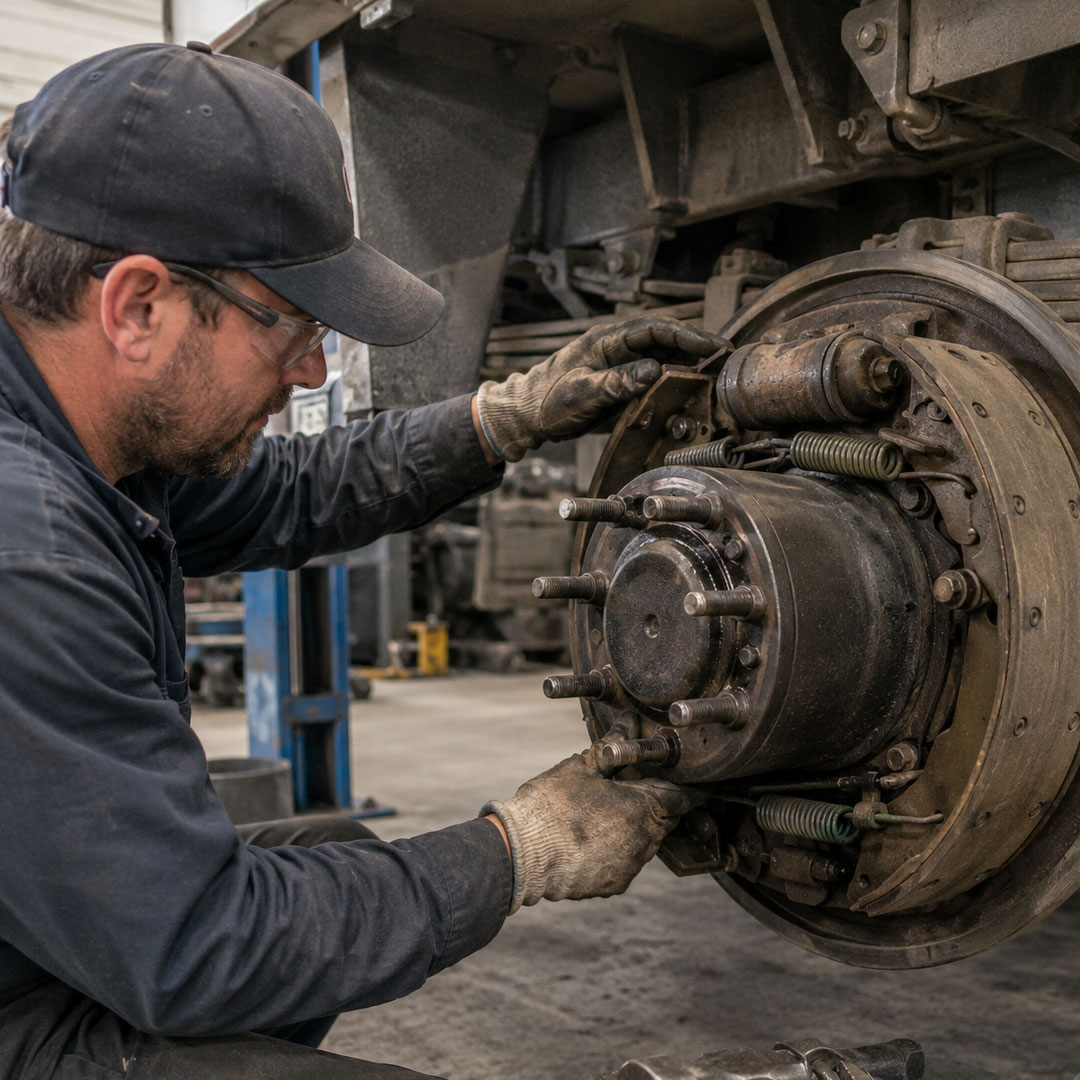
Why Axle Maintenance Matters Twice as Much
A neglected axle rarely gives any loud warning signs until damage has already occurred. A dry or improperly adjusted wheel bearing overheats, the grease loses its lubricating effect, and the tread becomes damaged. In the end, not only is the bearing ruined, but often the hub and brake are as well. What starts as a simple maintenance task then turns into a full axle overhaul. The effort required for regular inspections is negligible compared to the cost of axle damage that leaves you stranded on the side of the road.
We’ve explained the basics of the design and function of BPW chassis systems in “BPW Chassis Systems.” This article focuses on practical maintenance.
Lubrication Intervals: Follow the Specifications, Not Your Instincts
First, the most important rule: the type of grease, the amount of grease, and the interval depend on the axle type, year of manufacture, and usage profile. BPW distinguishes between different generations of axles and bearings, ranging from classic relubricatable designs to systems with long service intervals. Therefore:
- Refer to the service manuals for the specific axle type: The relevant values are specified in the BPW maintenance manual for the respective axle, not in a general rule of thumb.
- Use only the approved type of grease: Using the wrong type of grease or mixing different types can negate the lubricating effect.
- Take the operating profile into account: Construction sites, heavy loads, frequent exposure to moisture, or salt shorten the maintenance intervals compared to long-haul transport alone.
- Re-grease after every repair: If the bearing is opened, fresh grease is applied. Old grease is completely removed.
To be on the safe side, follow the manufacturer’s recommended intervals and document each maintenance procedure in a traceable manner.
Check and Properly Adjust Wheel Bearings
Wheel bearing play is the key inspection point for any axle maintenance:
- Lift the wheel and let it spin freely. Stiffness or noises indicate a damaged bearing or a brake that’s dragging.
- Check for play: Grasp the wheel at the top and bottom and wiggle it. Noticeable play means: Check and adjust the bearing.
- Assess running noise: A grinding or rough noise when turning is a clear warning sign.
- Adjustment and Tightening Torque according to BPW specifications. The correct preload determines service life: If set too tight, the bearing overheats; if set too loose, it wobbles.
Important: A hub that is noticeably warmer than the others after a ride is always cause for concern. In that case, the bearing should be disassembled and inspected—not simply relubricated.
Detect Wear Early
In addition to the wheel bearing, it’s worth checking the surrounding components during every maintenance check:
- Brake camshaft and bearings: Check for play and smooth operation; lubricate according to specifications.
- Brake pads and brake drum or disc: Check for wear limits. For detailed instructions, see our article on truck brakes.
- Shaft seals and gaskets: Grease leaking from the hub indicates a defective shaft seal. Dirt enters and grease leaks out at this point.
- Springs, control arms, and air bellows (for air suspension): Check for cracks, chafing, and leaks.
- Wheel bolts and wheel nuts: Inspect for damage and tighten to specification using a torque wrench.
Original or Equivalent? When it comes to the axle, the fit is what matters
Wheel bearings, seal kits, brake pads, and hub components are critical to safety on the axle. Here, it’s worth taking a close look at quality and ensuring a precise fit for the axle type. Whether you choose an original part or an equivalent replacement part depends on the specific component and its application. You’ll find guidance on this in “Original vs. Aftermarket Parts: When Is Which Worth It?”. In any case, the number on the part or on the axle type plate remains your reference for placing the correct order. To learn how to read it correctly, see “Find Spare Parts by OE Number.”
BPW Axle Maintenance Checklist
- Determined the axle type and year of manufacture; have the appropriate service manual on hand
- Checked wheel bearing play; rotation is smooth and noise-free
- Grease type, quantity, and service interval adhered to as specified
- Tightening torque for bearing adjustment is correct
- Shaft seals and gaskets are tight; no grease leakage at the hub
- Brake camshaft checked and lubricated; brake pads within the specified range
- Suspension, control arms, and air bellows show no damage
- Wheel bolts and nuts tightened to the specified torque
- Maintenance documented

Axle Parts at FZB
As a full-range supplier with over 350,000 items, FZB carries wheel bearings, seal kits, brake parts, lubricants, and suspension components for trailer and commercial vehicle axles. You can find the right part for your axle type in the FZB online store or by calling your local FZB location. It’s especially worth getting your axles checked before the season starts. Our Harvest Season Checklist shows how this fits into your overall preparation process.
Compatible parts: wheel bearings and wheel bearing kits, wheel hubs and accessories, air suspension. An overview of all brake assemblies: brake systems for commercial vehicles.