idem telematics: Tire Pressure and Trailer Monitoring Explained
A trailer often travels hundreds of kilometers without anyone really keeping an eye on it. Yet it is precisely the condition of the trailer that determines safety, fuel consumption, and unplanned downtime. This is exactly where trailer telematics comes in—and with idem telematics, FZB is offering a solution from the BPW Group that brings the trailer out of the dark and into the data stream. This article explains what’s behind it, why tire pressure is a key issue, and how fleets specifically benefit from it.
Why Tire Pressure Has Become a Top Priority
Tires are the most expensive wear-and-tear item after fuel—and incorrect tire pressure ruins both at the same time. Too-low pressure increases rolling resistance and fuel consumption, causes the tires to overheat, and, in the worst case, can result in a tire blowout on the trailer—often unnoticed because no one looks at the rear.
Lawmakers have responded: According to UN Regulation ECE R141, a tire pressure monitoring system (TPMS) is mandatory for new vehicles and trailers. What was once optional has now become mandatory—and thus an issue that affects every fleet operator, not just tech enthusiasts.
How Tire Pressure Monitoring Works
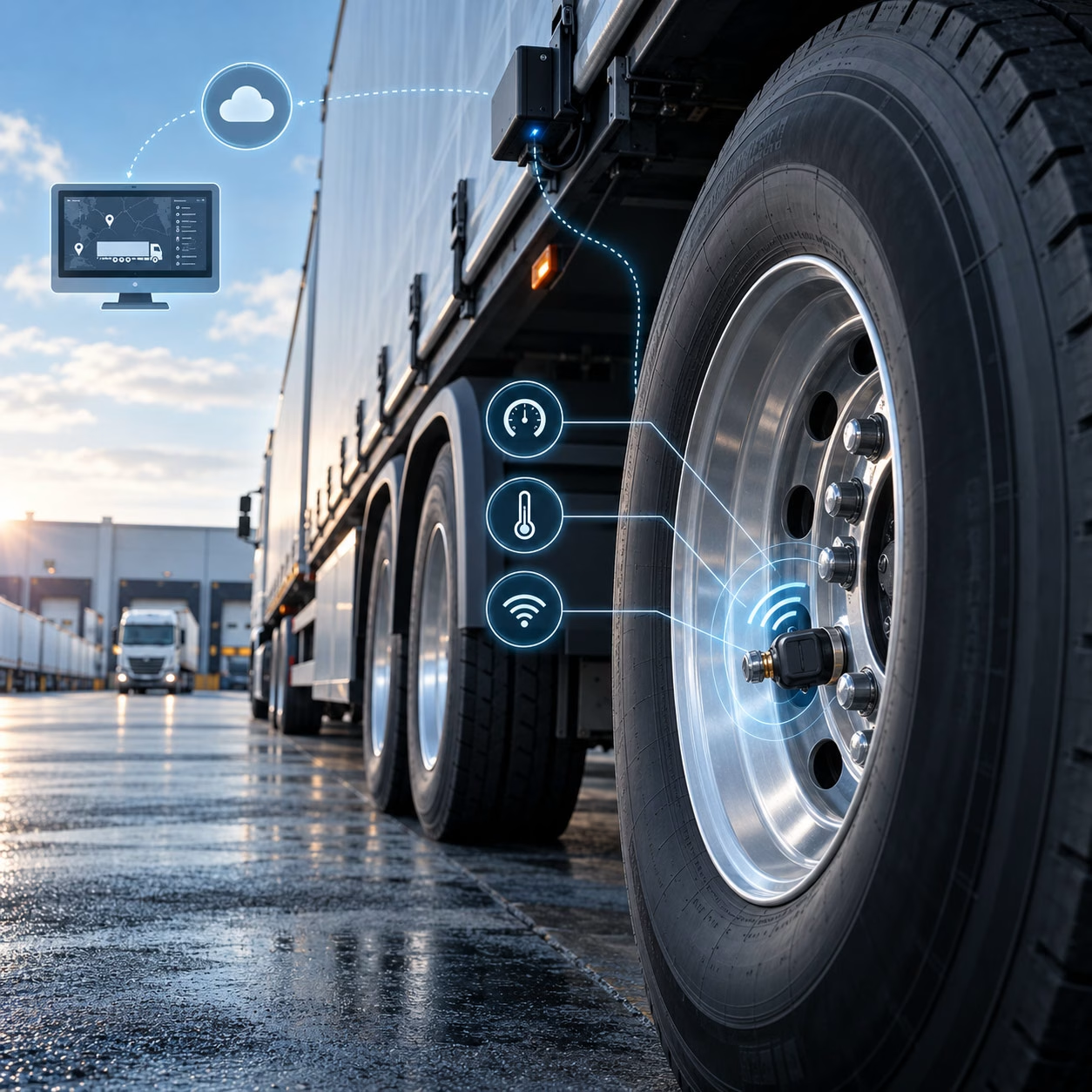
The principle is simple. Sensors mounted on the rims continuously measure tire pressure and temperature and transmit the data via radio to a receiver unit in the trailer. From there, the data is routed in two ways:
- To the Tractor: Tire data is transmitted to the tractor via the electronic braking system (EBS) and can be displayed to the driver—as required by ECE regulations.
- To headquarters: The same data is sent to the dispatch center via the telematics function. If a pressure reading deviates from the target value, an automatic notification can be triggered—before a gradual loss of pressure leads to damage.
This way, not only the driver but also the office knows at all times whether everything is in order with the trailer.
More Than Just Tire Pressure: The Trailer Telematics Behind It
Tire pressure monitoring is just one component. At the heart of the system is a telematics gateway on the trailer—the TC Trailer Gateway family from idem telematics—which aggregates data from various sensors and sends it to a central platform. Depending on the configuration, it provides, among other things:
- Tracking and Coupling Status: Where is each trailer, and to which tractor is it currently coupled?
- Brake and EBS data: Operational and diagnostic data for the braking system, including brake pad wear.
- Tire pressure and temperature: the TPMS function mentioned above.
- Temperature monitoring for refrigerated transport, often with a certified temperature logger.
- Maintenance and diagnostic data for proactive workshop planning.
Everything converges on a single telematics platform where the tractor and trailer can be analyzed together. A modular approach: You start with the base package and add additional features as needed.
How Fleets Benefit Specifically
- Fewer breakdowns: A gradual loss of pressure is detected before the tire fails—this prevents costly breakdowns and consequential damage.
- Lower costs: Proper tire pressure noticeably reduces fuel consumption and tire wear.
- Predictable maintenance: Wear and braking data allow you to schedule service appointments proactively instead of waiting for the next breakdown.
- Regulatory compliance: With a TPMS that meets industry standards, you comply with the requirements of ECE R141.
- Transparency: Tracking and connection status provide dispatchers with an overview of the entire fleet.
It is precisely this combination of safety, cost reduction, and regulatory compliance that makes this topic particularly appealing to transportation companies—here, a single investment pays off in multiple ways.
Is this retrofit compatible with my fleet?
The gateways are designed so that even existing vehicles can be retrofitted—commissioning is largely based on the plug-and-play principle. Whether you’re purchasing new vehicles or managing an existing fleet, the most appropriate upgrade level depends on the size of your fleet, its usage profile, and the existing equipment. The best way to determine this is through a consultation.
Consulting and Technology at FZB
idem telematics is one of the brands that FZB carries as part of the BPW Group—in addition to its full product range of over 350,000 items. Whether you need tire pressure sensors, a gateway, or help determining which solution is right for your fleet: Your local FZB location will advise you, and you’ll find the right components in the FZB Webshop. Since telematics and mechanical maintenance go hand in hand, it’s also worth checking out BPW axle maintenance and fifth-wheel couplings & kingpins.