
Stability during steering movements
A steering damper (also known as a “steering shock absorber”) dampens vibrations and restoring forces in the steering system. It helps keep the steering wheel stable and reduce oscillation, especially on uneven surfaces, in crosswinds, or during rapid load changes. This noticeably improves ride comfort and safety.
Fine tuning
For a steering damper to be effective, its damping characteristics must match the axle geometry and steering ratio. The length, connections and attachment points must be precisely matched to the system so that the damper works correctly over the entire range of movement.
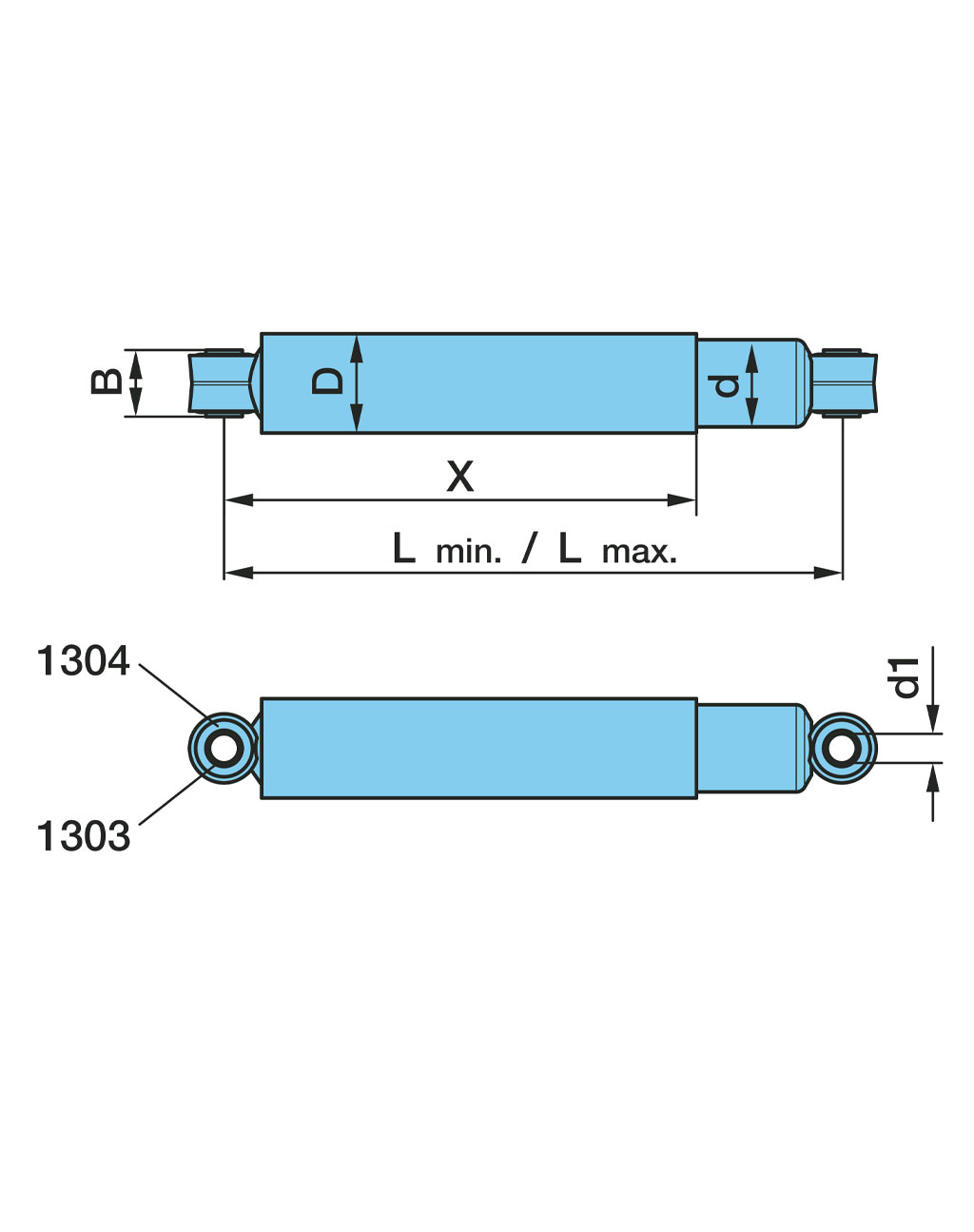
What should you look out for when buying:
Crucial for driving stability in heavy-duty transport
The steering damper plays a particularly important role in truck safety, which goes far beyond the comfort found in passenger cars. Given the high axle loads, the large tire diameter, and the need to compensate for trailer movements (e.g., swaying or yawing), the damper must absorb massive forces. It prevents road impacts caused by potholes or severe bumps from being transmitted undamped to the steering wheel. In truck operation, its main task is to suppress dangerous wheel flutter (the “shimmy” effect) and to stabilize the restoring forces in a controlled manner in order to maintain steering precision at high speeds and in critical driving situations.
Design and Damping Characteristics
Due to the high forces involved, truck steering dampers are significantly more robust and larger in size than those used in passenger cars. They must be able to maintain a consistently high level of damping performance over a long service life and across a wide temperature range. Fine-tuning the damping characteristics is crucial: The damper must provide sufficient resistance to eliminate unwanted vibrations, but must not negatively affect the driver’s steering feel and feedback. The mounting points and flange connections must be extremely sturdy and corrosion-resistant to withstand constant exposure to water spray, dirt, and road salt.
Prevention and maintenance for operational safety
The wear or leakage of a steering damper often only becomes noticeable late in truck operation, but can then have serious consequences for directional stability. A defective damper leads to a more direct transmission of shocks to the steering wheel, which increases driver fatigue and reduces steering precision. It is therefore essential to regularly check the tightness and damping force as part of the maintenance routine. When purchasing replacement dampers, it is essential to choose OE or original equipment quality to ensure that the specific damper characteristic curve is precisely matched to the axle load and steering geometry of the respective truck model, thus guaranteeing maximum safety in commercial traffic.